A connector is a permission
You log into a tool once, you approve what Perplexity may read and do there, and from then on any agent can reach that tool by name. No copy and paste. No screenshots. The Ads agent asks Meta for your last seven days of spend and Meta answers.
This is the longest step and the one that matters most
On the call, Foundation reads your tools to check what you told it. The first agent reads your real inbox or your real ad account. None of that works if the tools are not connected, and connecting them needs your logins, so it has to be you.
There are three ways a tool plugs in
Native connectors use the tool’s own login screen, like when an app asks to use your Google account. Most tools work this way. API key tools give you a long string of letters you paste into the Credential vault. A few tools have neither, and Comet, Perplexity’s browser, drives them. We set up Comet with you after the call.
One rule to start
Use one Google account for Gmail, Calendar and Drive. Mixed up Google accounts is the most common thing we end up fixing on calls.
What you do before the call
Open Connectors.
On most accounts it is a page called Plugins in the sidebar. On some it still sits under Customize. Same page.
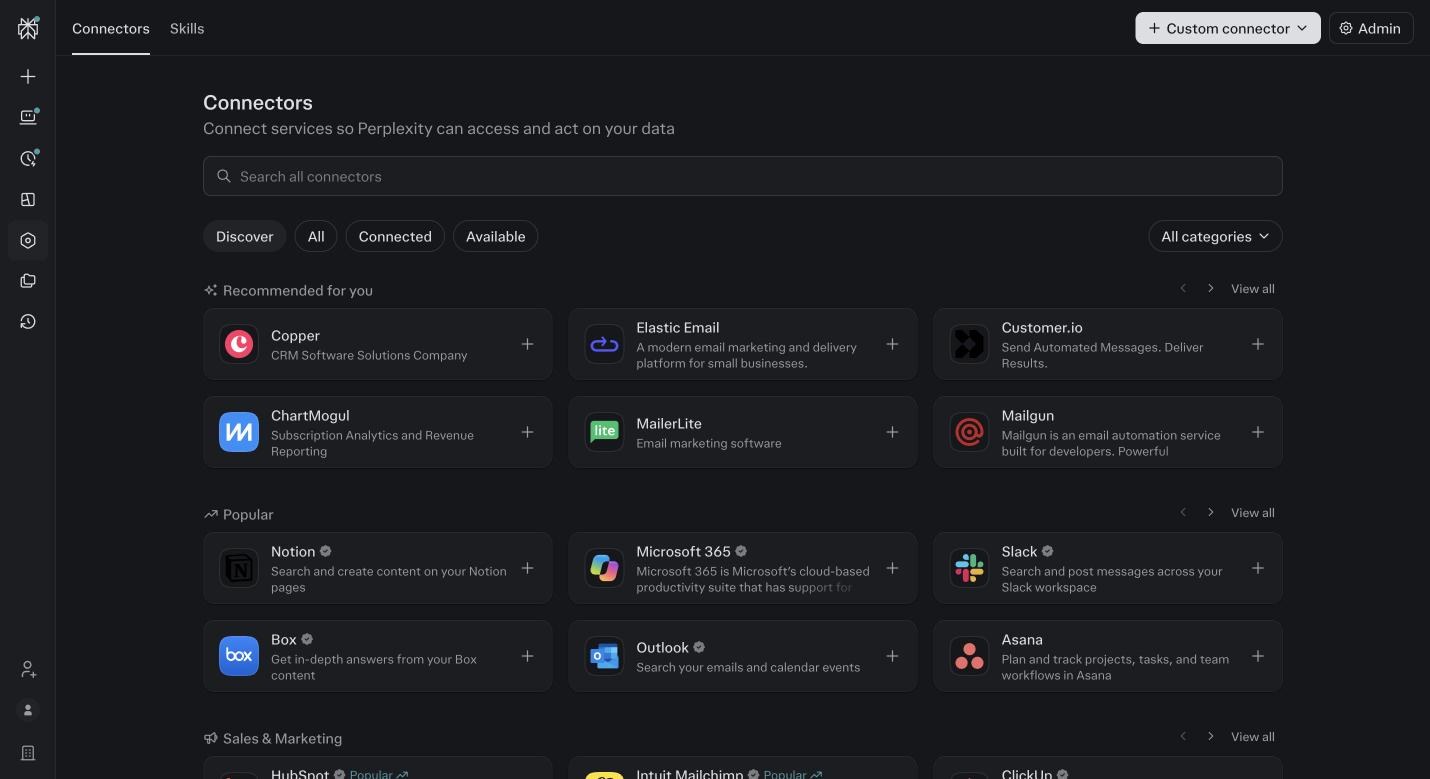
Connectors, Discover tab. Each card is one tool. Connect Google Drive, Gmail and Google Calendar first, all with your one business Google account.
Click the card, click Add connector, pick the account, approve the full permissions.
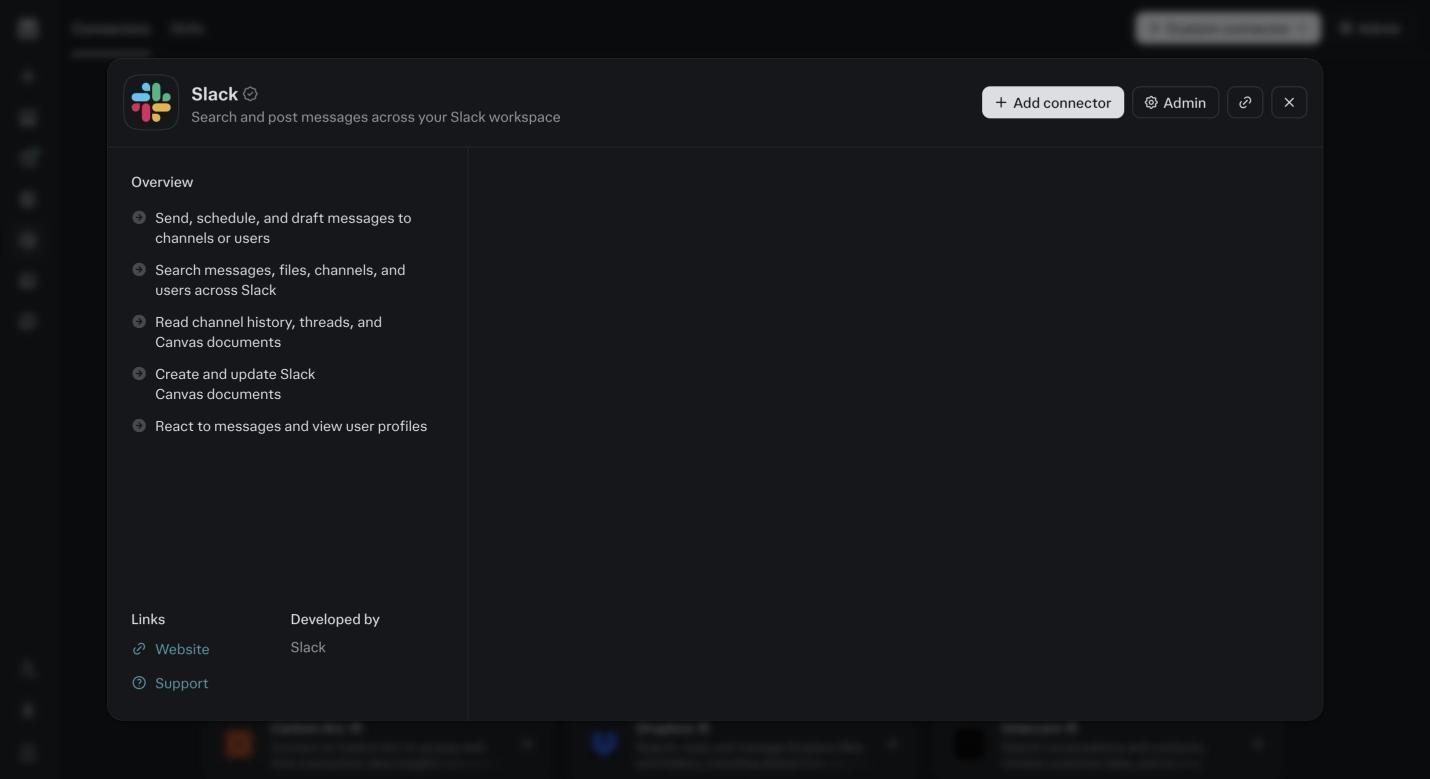
Inside a connector card before connecting. The screen is the same for every tool. Open the Connected tab and check the Google email on Drive, Gmail and Calendar match.
If one is wrong, remove it and connect again.
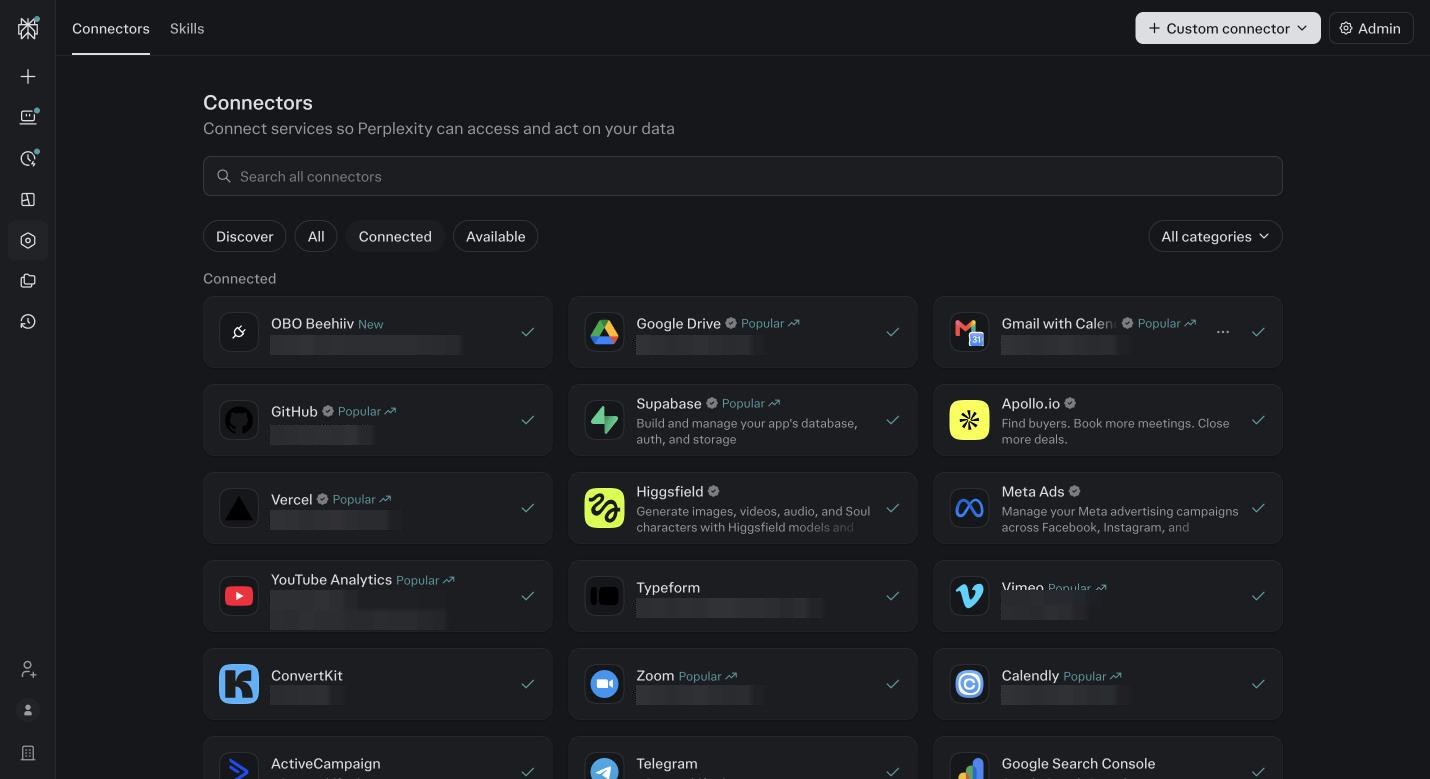
The Connected tab. Each card shows the account it is using. Now connect the rest of what you use.
Zoom. Slack or Telegram. Meta Ads if you run ads. Your calendar booking tool. Stripe. QuickBooks. Your CRM. Use the list below. Skip what you do not use.
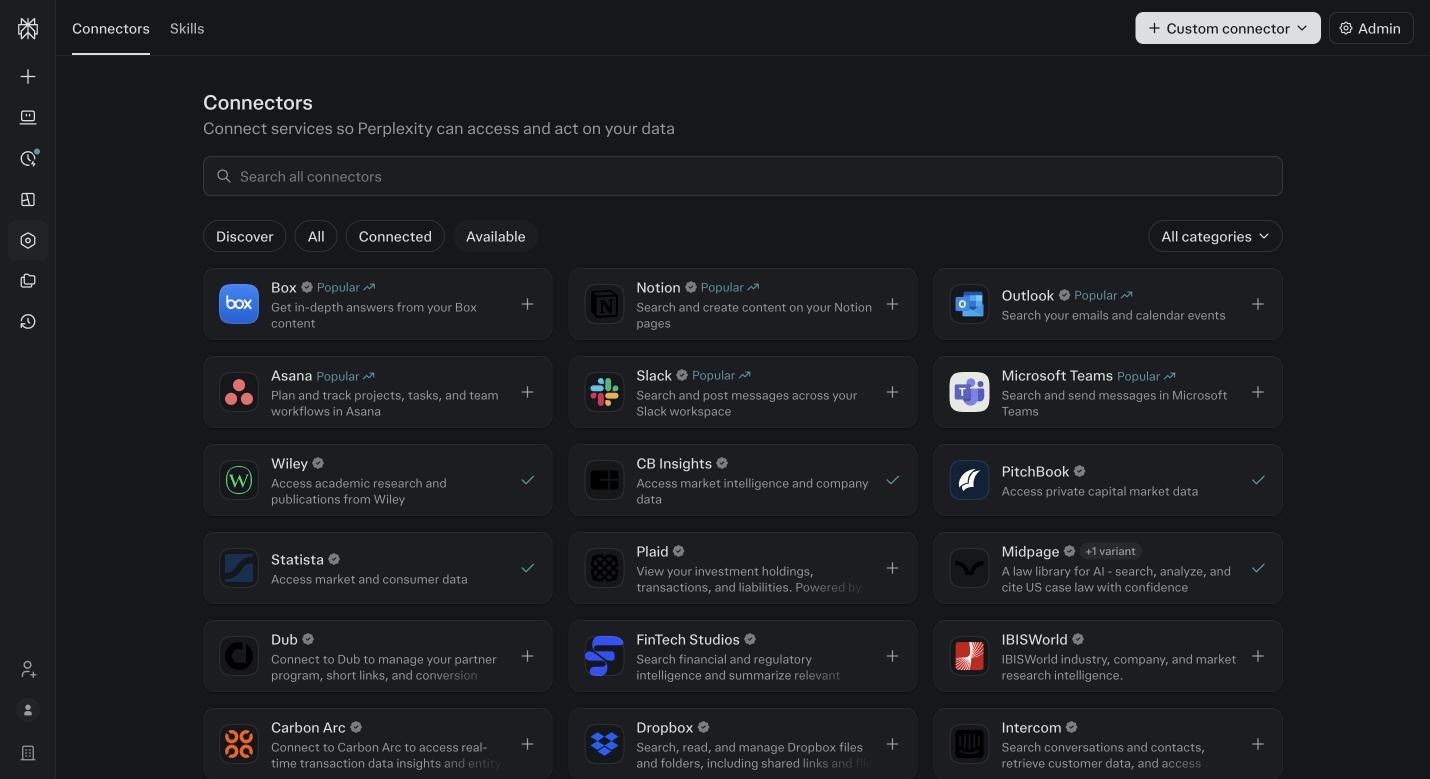
The catalog. Connect what you use, not what looks interesting. For tools that need an API key, open Settings, then Credential vault, then Add credential.
Copy the key from the tool first. Name, host, type, value. The exact fields for ActiveCampaign, Kit, HighLevel, Kajabi and the rest are in the API key cards below.
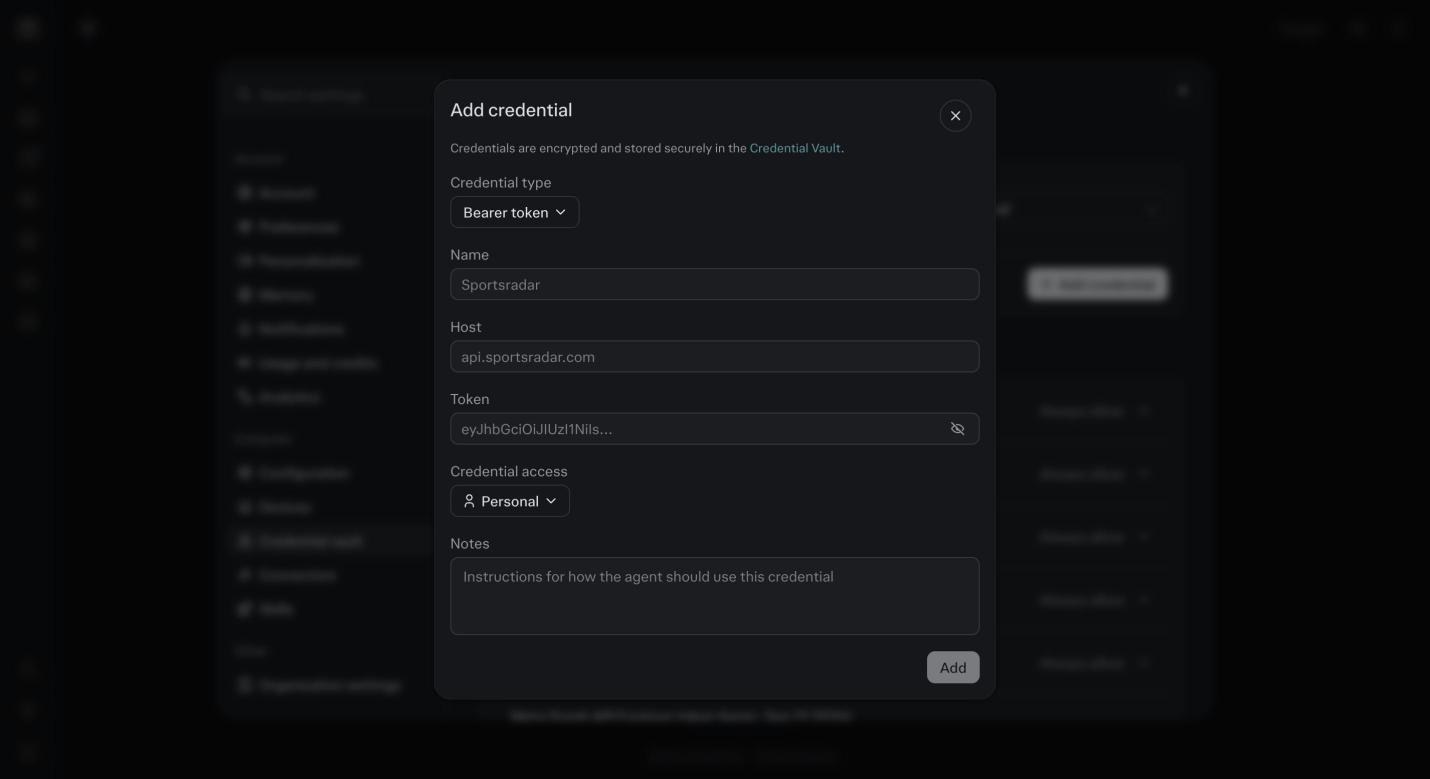
The Add credential form. Four fields. The cards below tell you what goes in each. Set permissions once.
Click into each connected card. Leave reads on Allow. Set anything that sends, deletes or spends to Always ask.
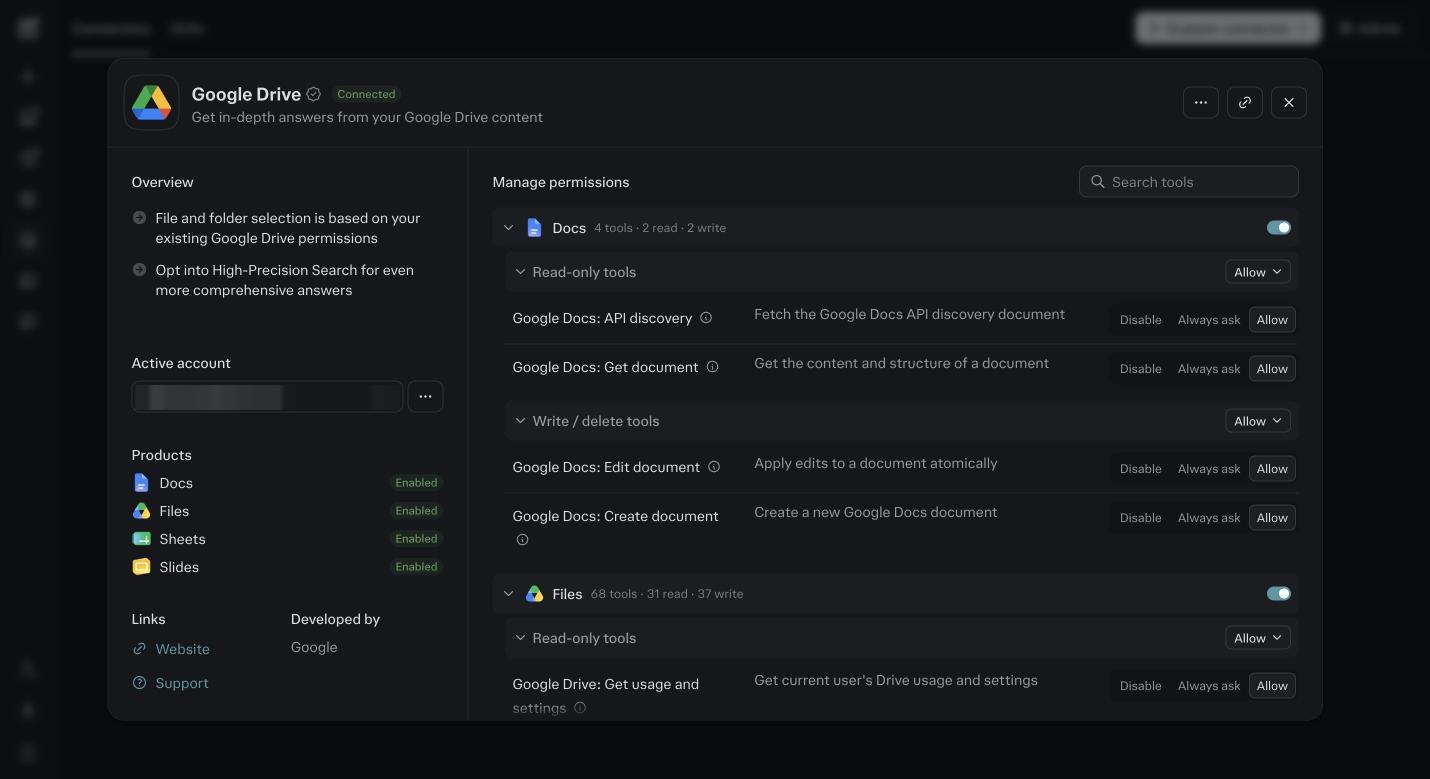
Inside the Drive connector. Reading on Allow, writing on Always ask. Test each one.
New session, ask something only that tool knows: what is on my calendar tomorrow, list my last five Zoom recordings, how much did I spend on Meta this week. If it answers with your real data, it is connected.
Tools that need a key, not a login
- ActiveCampaign
- In ActiveCampaign: Settings, then Developer, then copy the API key and the API URL. In the vault: name it ActiveCampaign, host is your API URL without https, credential type Header, header name Api-Token, value is the key. Test: how many contacts are on my main list.
- GoHighLevel
- In HighLevel: Settings, then Private integrations, then create a token and select all scopes. The security warning is expected, the connection breaks without them. Copy the token and your Location ID. In the vault: host services.leadconnectorhq.com, credential type Bearer token, value is the token. Keep the Location ID in a note, the agent asks for it. Test: list my pipelines.
- Kajabi
- In Kajabi: Settings, then Integrations, then the API section. Copy the key. This is a different form from HighLevel. Do not paste the HighLevel token here. In the vault: host api.kajabi.com, and pick the credential type the Kajabi screen names next to the key. Test: list my products.
- Help Scout
- Help Scout does not fit the vault today. Its API hands out a token that dies after two days, and you have to trade an App ID and App Secret for a new one each time. The vault holds one fixed key, so a saved Help Scout key stops working on day three. Use Comet instead: log into Help Scout in Comet once, then say: in Comet, open Help Scout and show my last ten conversations. If Perplexity ships a Help Scout connector, this card changes.
- Circle
- In Circle: Settings, then Developers, then API tokens. Create a token and note which API it is for, Circle has more than one. In the vault: host app.circle.so, credential type Header, header name Authorization, value is the word Token, a space, then the token. Test: list my spaces.
- Stripe
- In Stripe: Developers, then API keys, then Create restricted key. Give it read only on charges, customers and subscriptions. Never the full secret key. In the vault: host api.stripe.com, credential type Bearer token. Test: revenue in the last 30 days.
- Every key
- Copy it before you leave the screen that created it, most tools show it once. Save it in your password manager too. Test right away in a new session. If the test fails, the host or the credential type is wrong nine times out of ten.
The Usual List, By Pillar
| Pillar | Connect | Watch for |
|---|---|---|
| Marketing | Meta Ads. Your email platform (ActiveCampaign, Kit, beehiiv or Mailchimp). YouTube. | Email platforms ask for an API key, not a login. Meta needs you to be an admin on the ad account. |
| Sales | Gmail. Calendar. Calendly. Zoom. Your CRM (HubSpot, Pipedrive, HighLevel). Stripe or Commas. | HighLevel keys take the longest. Help Scout has no connector yet, we use Comet after the call. |
| Delivery | Drive. Zoom. Vimeo. Telegram or Slack. | Zoom transcripts can take an hour to appear after a call. |
| Operations | Gmail. Calendar. Drive. Sheets. Notion or ClickUp. | One Google account for all three Google tools. |
| Finance | QuickBooks or Xero. Stripe or Commas. Sheets. | The accountant may own the login. Get it before the call. |
| Mindset | Notes or Notion. Calendar. | Local files come through the desktop app after the call. |
Before you ask
How many connectors should I have?
The ones you actually use. Ten is normal. Twenty is fine. A connector you never use is one more thing that can break.
A connector errored.
Remove it and connect again with the right account. If it still errors, post a screenshot in the Telegram group and move on to the next one.
Do I set up Comet or the desktop app now?
No. Both come in the follow up after the call. The cloud connectors are what the call needs.
Google keeps asking me for a passkey.
Make the passkey when it prompts you, once, then run the connector again. Deleting old passkeys does not stop the ask.
It shows my agency account and my own. Which one?
Your own, the account that holds this business. Client subaccounts come later.
Where do I make the API key?
Inside the tool, usually Settings, then API or Developers. It goes in Perplexity under Settings, Credential vault, Add credential. Auth error, make a fresh key.
Zoom was not on my Connected tab.
Connect it. Call recordings are the richest thing the agents read. Test with: list my last five Zoom recordings.
WhatsApp has my clients and my family.
Connect it if your client groups live there, then tell the agent: only read these groups. Move personal chats to a personal number when you can.