Foundation is the first agent, and every other agent reads what it writes
Think of it as the new hire’s first week, done once, properly. Before anyone on a team can do good work for you, they need to know who you are, what you sell, who buys it, how you talk, what makes you different, and the stories you tell. Most people never give an AI any of that, and then wonder why the output sounds like everyone else’s. Foundation is one interview that gathers all of it and writes it down in a folder every agent opens before it does anything.
Here is what it actually does
It reads your Material folder and your sketch first. Then it interviews you, one question per message, in six parts, always in the same order: you, your business, your voice, your relevancy, your stories, your brand. Where it already found a fact in your files it shows it and asks you to keep it or fix it. Where your website and your files disagree, it asks which is right. Then it writes the Foundation folder into your Project files: your business context, your human context, your voice pack, your brand profile, your relevancy, your story vault, a first output you can read, and a PDF of all of it. Every answer is also saved to your Drive if you connect it, in your own words, with the question as asked.
Inside Foundation there are six engines, one per part, and that is the point of calling it an agent rather than a questionnaire. The business engine holds your offers, your model, your numbers and your map. The human engine holds who you are, your season, how you think and decide. The voice engine builds your voice pack from your real writing, not from a description of it, and tests it against you. The relevancy engine holds who you serve and why the right people pick you. The story vault holds your stories, your proof and your teaching, with consent tracked per person. The brand engine holds your colours, type and look. Every other agent reads from these, and no other agent ever asks you a question Foundation already answered.
Three depths, one interview
Light, Regular and Full are the same interview at different depths, not three different products. Light is three parts, you, your business, and a short relevancy skim, about 38 questions, about 40 minutes. Regular is all six parts at the most valuable half of Full, about 140 questions plus the voice and brand steps, four to five hours in sittings. Full is all six parts all the way, several hundred questions, with a graduated voice, a relevancy diagnostic and blueprint, the story vault built from three recorded sittings, and three brand directions to pick from. You can move up a depth any time and every answer carries over. Nobody runs Light and then starts Regular from scratch.
One more thing, because people ask what it does not do
Foundation gathers. It does not score your business, name your constraint or hand you a strategy. That is the job of the agents that act on it, Strategy and Offer first. Keeping those apart is what makes the profile honest.
And a note on the install
Step one below attaches your Scaling Agents bundle and installs it. That one step installs every agent into your Project in one go, each with its own workspace, so you only do it once. Module 9 explains each agent. For now, Foundation is the only one you run.
What you do, step by step
Open your Project and start a new session.
Attach the Scaling Agents zip with the plus button, choose Add images and files, and type: install this bundle into this Project. Module 9 walks the installer screen by screen. When it finishes it tells you to start with Foundation.
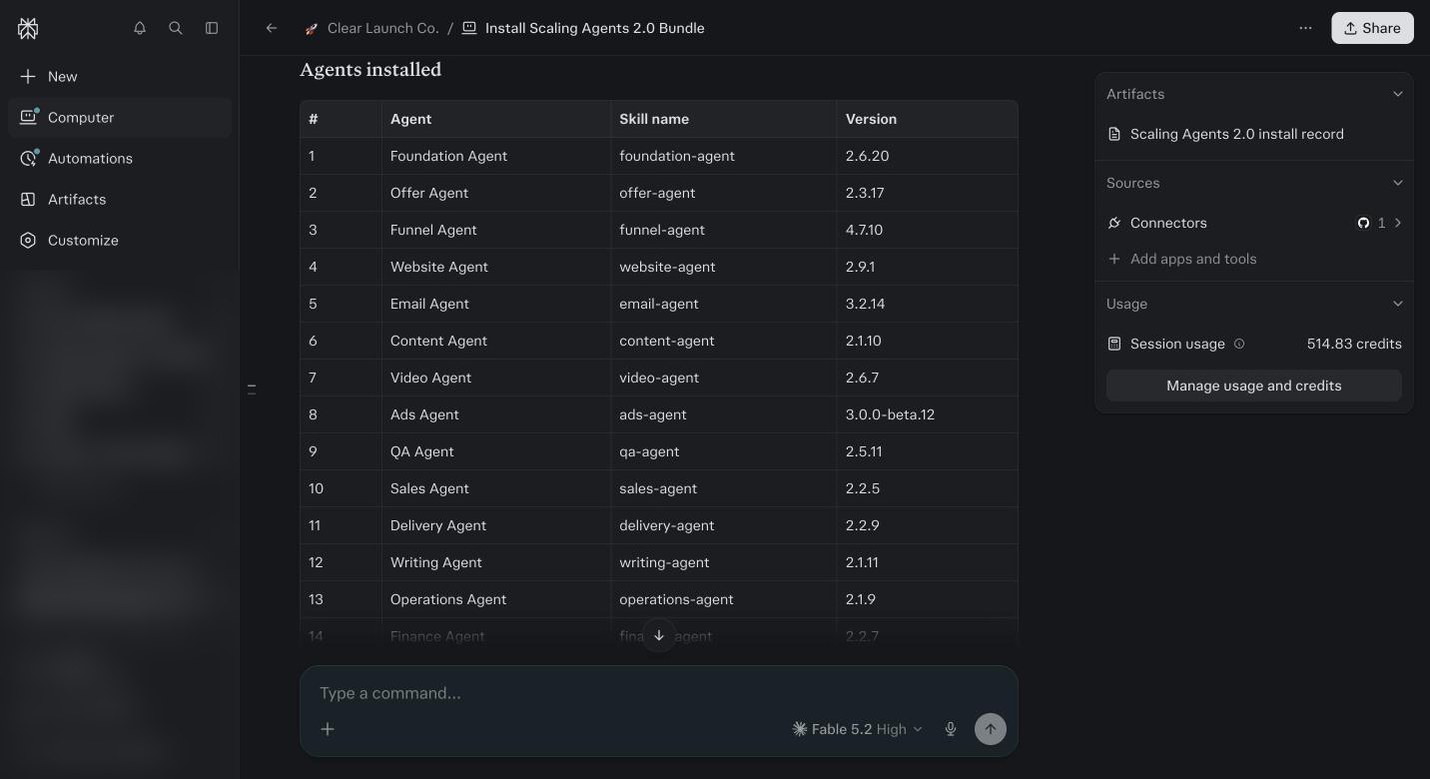
The end of an install session. The installer lists what went in, writes the install record, and tells you to say set up foundation. Start a fresh session in the Project.
Type: set up foundation. It greets you, confirms it can see your Material folder and your sketch, and asks which depth. Pick Light unless you already know you will be producing a lot of copy, in which case pick Regular.
It offers a short walkthrough before the questions.
Take it the first time. Two minutes, and it tells you how to pause, how to correct an answer, and how to come back.
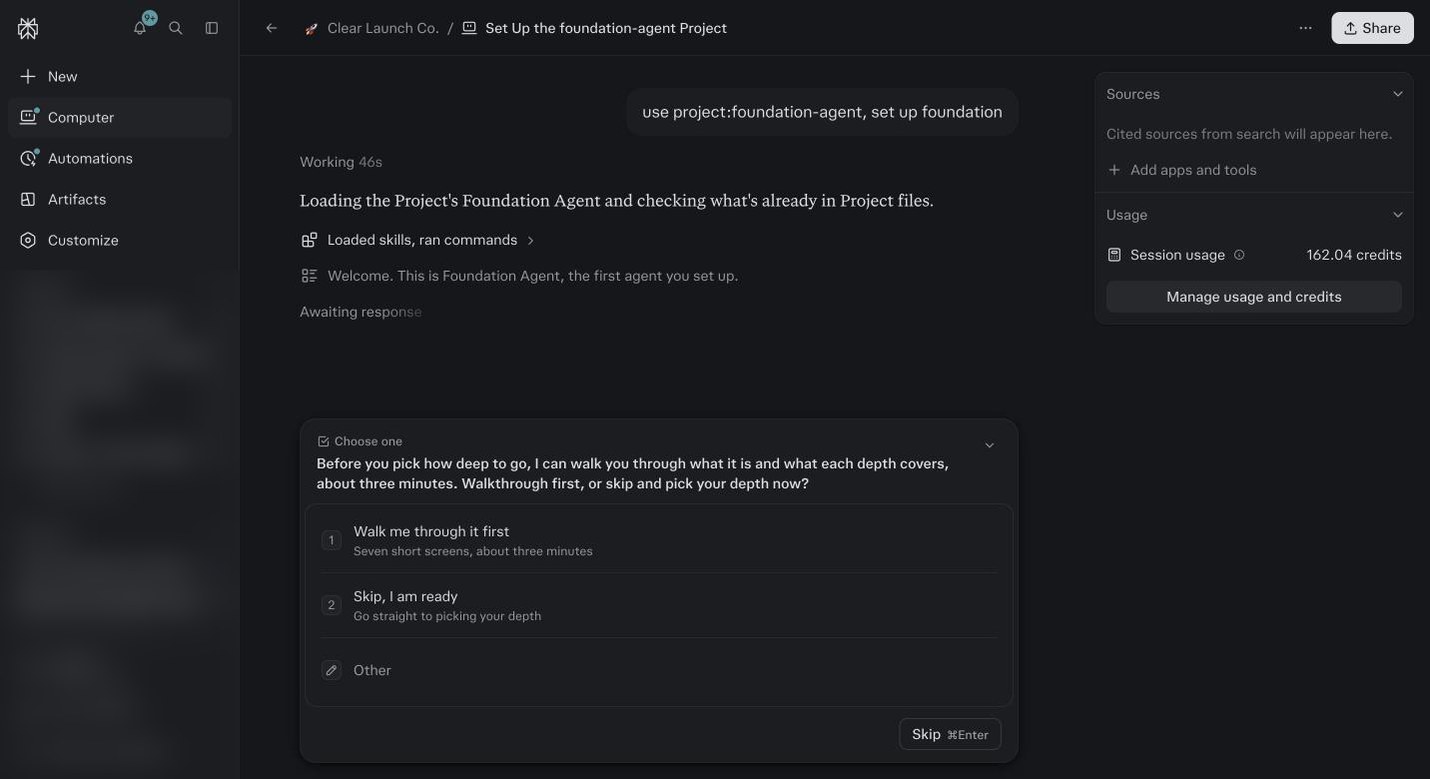
The start of Foundation in the demo. It confirms it can see the Material folder, then offers the walkthrough before the first question. Answer one question per message.
Where it already read a fact from your files it shows it and asks you to confirm. Confirm or correct. Where your website and your files disagree, it asks which is right. Do not skip these, that is the whole point.
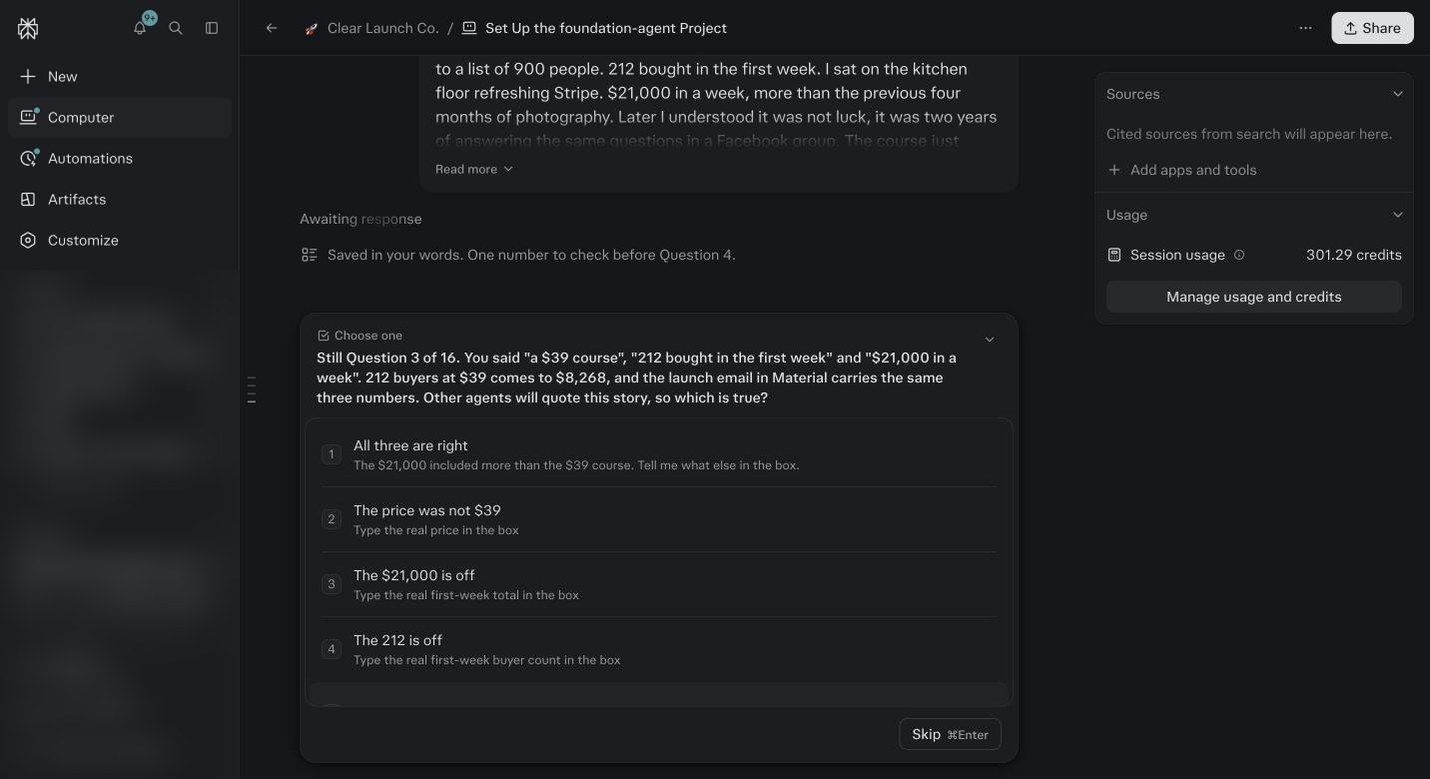
Foundation stopping at question three in the demo. Three numbers in the story did not agree, so it asks which is true before any agent can quote it. Stop whenever you need to.
Say pause. It saves where you are. Come back to the same session and say resume. Do not start a second Foundation session, it will try to begin again.
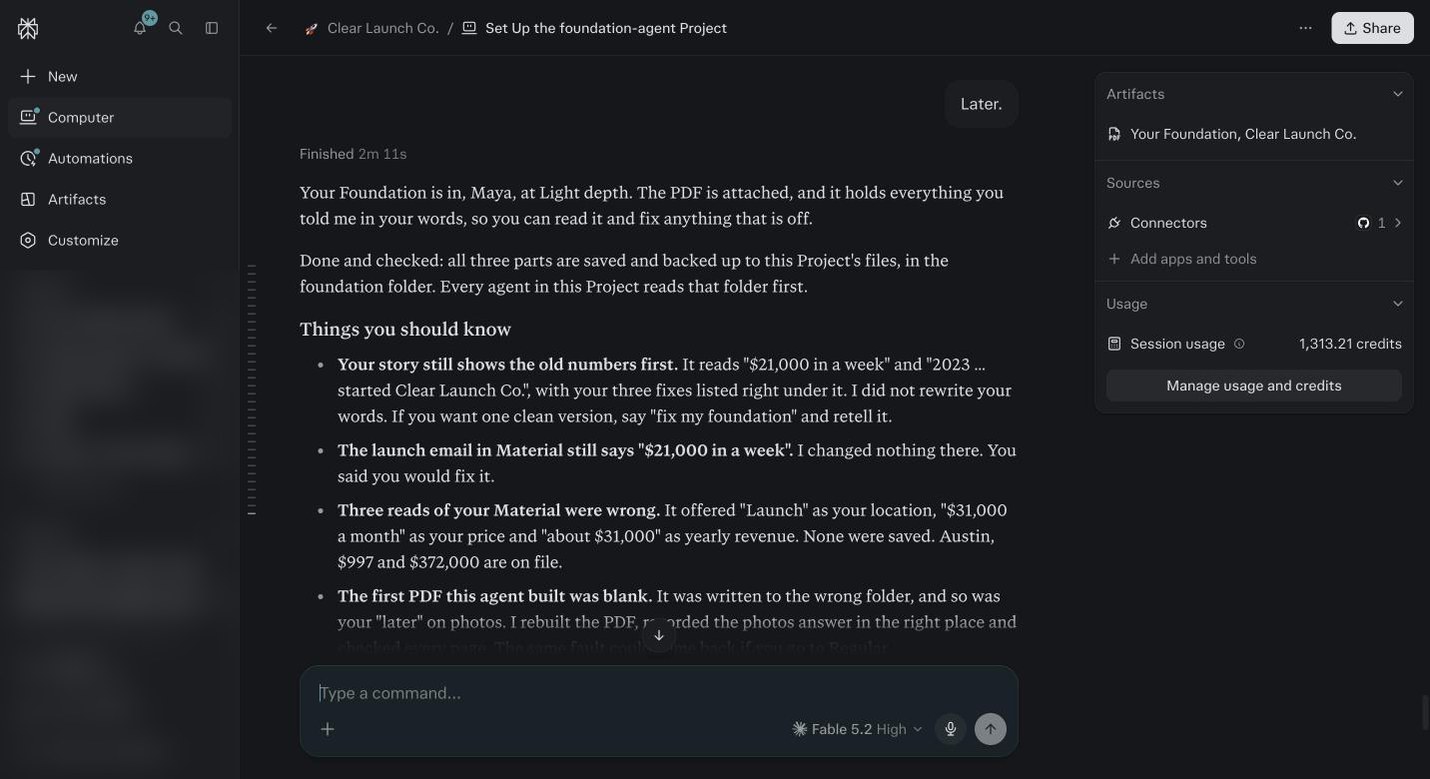
The end of Foundation Light in the demo Project, 1,313 credits on a High model. It says what it wrote, where it saved it, and lists what it got wrong on the way and fixed. Read that list. At the end it shows you a profile summary.
Read every line. Correct anything wrong in plain words before you confirm. Then open the Project files and look at what it wrote. You should see a foundation folder with the profile, voice, offers, stories and brand files.
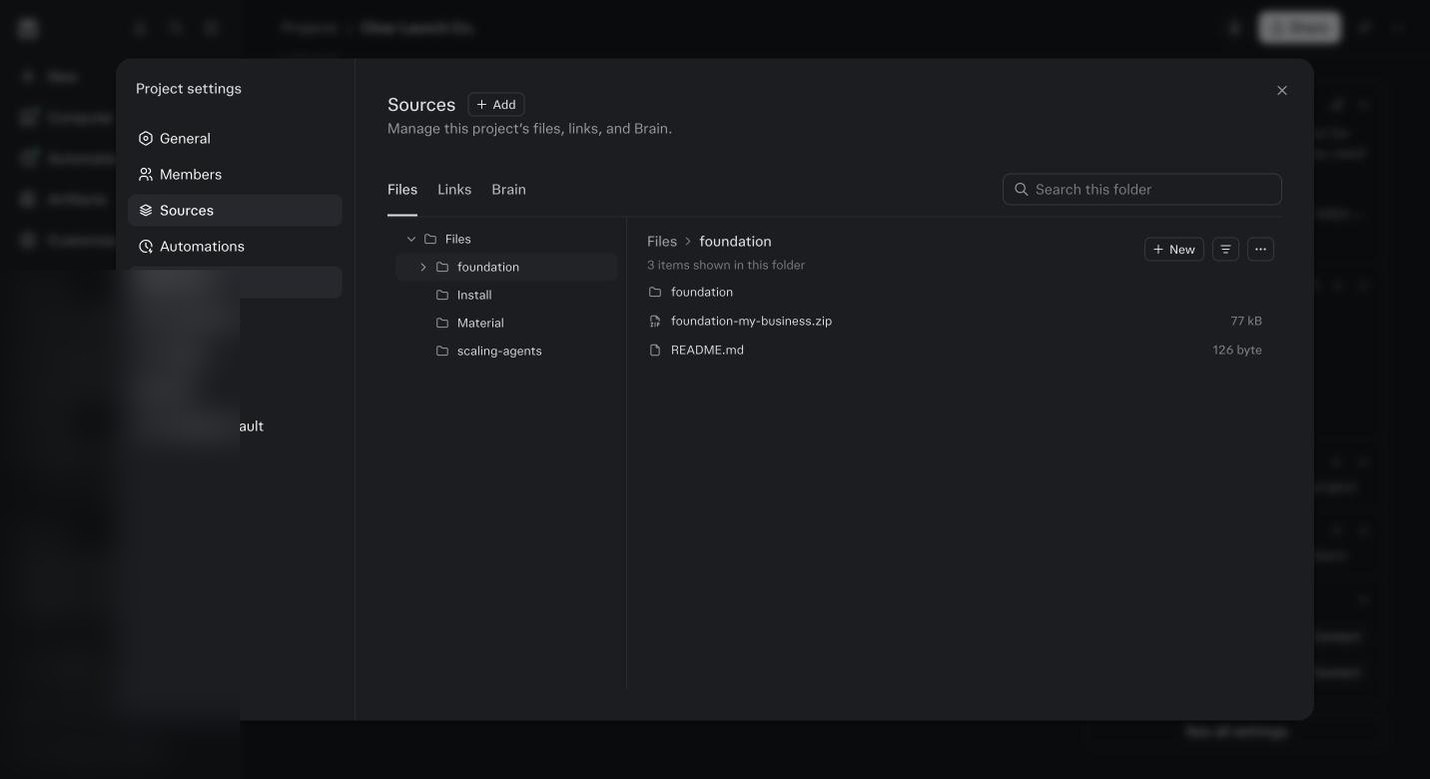
Project files after Foundation. The foundation folder holds the context files, the first output and the PDF. Every agent opens this first. Test it from another agent’s point of view.
New session in the Project. Ask: read the Foundation profile and write me three subject lines for my main offer in my voice. If they sound like you, Foundation took. If they sound like a marketer, go back and tighten the voice part.
What Foundation Asks, Part By Part
| Part | What it asks about | What it writes | Light | Regular | Full |
|---|---|---|---|---|---|
| 1. You | Your name, your season, how you think and decide, what you are pretending not to know. | Human context. | Essentials | Deeper | All 57 questions, plus an optional intuitive lens |
| 2. Your business | What you sell, to whom, prices, team, numbers, history, your map, the ROI Method, the three lanes. | Business context. | Essentials | Deeper | Everything, including goals, constraints and working style |
| 3. Your voice | Your real writing, harvested from sent mail or pasted pieces. Never say list. Calibration: you cut the lines that are not you. | Voice pack and card. | Skipped | Built and calibrated once | Graduated: three calibration rounds and a test where you pick your lines from the machine’s |
| 4. Your relevancy | Who you serve, why the right people pick you, your positioning. | Relevancy file. | Short skim | Core questions | The 37 question diagnostic and the nine section Relevancy Blueprint |
| 5. Your stories | Stories, proof, teaching, in your words, with consent per person named. | Story vault. | Skipped | Core stories | Three recorded sittings and the full vault with mining of your transcripts |
| 6. Your brand | Colours, type, look, what you never want to look like. From your website or picked from three cards. | Brand profile and tokens. | Skipped | Read from your site or picked | Ten sections, three directions, you lock one |
Light, Regular, Full, In Results
Light, about 40 minutes
A profile every agent can read today. Offers, prices, customer, how you work. Enough for Operations, Finance, Sales follow up and a first email that is close. Your voice is from the interview, not your writing, so copy will need your hand. Pick it if you want a result today and will come back for more.
Regular, 4 to 5 hours in sittings
Everything in Light, plus a voice pack built from your real writing and calibrated with you, your brand read from your site, your core stories, and the relevancy questions. Emails and posts sound like you on the first draft. The default for managed installs and for anyone whose agents will write.
Full, two weeks in sittings
Everything, all the way. A graduated voice you cannot tell from your own. A relevancy diagnostic and a nine section blueprint. A story vault with your proof and teaching, consent tracked. Three brand directions and a lock. For offers that live or die on voice and positioning, and for people who want to do this once.
Six Rules For The Interview, From Running It A Few Hundred Times
The quality of your profile is the quality of your answers. These are the rules I give every client.
- Talk, do not perform
- Answer like you are telling a friend over coffee. Rough and real beats polished. A voice memo pasted as text is a great answer.
- Rough numbers beat no numbers
- If it asks revenue and you are not sure, give a range. A blank teaches the agents nothing. A range teaches them where you are.
- Keep or fix, do not re explain
- When it shows a fact from your files, say keep, or say the fix. Do not retype what it already has.
- Say not provided when you mean it
- Skipping is an answer. Say not provided and it is recorded as unset. You can answer it later and it replaces the blank.
- Your webinar voice is not your writing voice
- For the voice part, give it things you typed. Emails, posts, messages. Not transcripts of you talking. You do not write the way you speak on a stage.
- Pause whenever you need to
- Say pause. It saves where you are. Come back to the same session and say resume. Never start a second Foundation session. It will try to begin again.
The three depths
| Depth | Covers | Time | Who picks it |
|---|---|---|---|
| Light | You, your business, and a short relevancy skim | About 40 minutes, about 38 questions | Getting started. Content light businesses. Anyone who wants a first result today. |
| Regular | Adds voice, brand and deeper business context | 4 to 5 hours, about 140 questions, in sittings | Default for managed installs. Anyone who will produce copy, emails or ads. |
| Full | Everything, including relevancy and stories, as its own version | Eight sittings | Offers that depend on voice and positioning. People who want to do this once. |
Same interview, six parts, same order at every depth: you, business, voice, relevancy, stories, brand. Full is its own version and does not replay Light first.
Before you ask
Can I run Light now and Full later?
Yes, and most people should. Light today, Regular or Full when you are ready. Every answer carries over and it only asks what is new. Your agents pick up the new profile on their own.
What if it asks something that is in my files?
Just answer it. It reads your files first, but a fact buried in a long document can get missed. Thirty seconds of typing beats a wrong profile.
Where does my voice come from if I have no writing?
The interview. It asks how you talk, what you never say, what you say too much. That is thinner than real samples, so if you have any emails at all, drop them in the folder before you start.
Why does it ask one question at a time?
Because a form of forty questions gets skimmed and a conversation gets answered. It also lets it ask for clarity the moment an answer is unclear, instead of saving a guess.
Why does it not tell me what to fix in my business?
On purpose. Foundation gathers. Scoring your pillars and naming the constraint is the Strategy Agent’s job, and designing the offer is the Offer Agent’s. Keeping them apart keeps the profile honest.
What happens to a hard personal answer?
It is saved in your words, in your human context and the PDF only. It never goes into marketing copy or the story vault unless you say, in so many words, that it may be used and where.
Can my assistant run Foundation for me?
For the business parts, with you nearby for the facts, and never for the voice part. The voice has to come from the person whose name goes on the writing, and the mailbox it reads must be yours.
What if I run a business with a partner?
Run Foundation once for the business. In the voice part, decide whose voice the agents write in, or run the voice part twice and name the two packs. Everything else is shared.
How do I fix something later?
Open the Foundation session and say: fix my foundation. It asks what is off, saves the fix, and rebuilds the PDF. Every agent reads the new version next time it runs.
Where is all of this saved?
The foundation folder in your Project files, and a copy in a Drive folder if you connected Drive when it asked. Perplexity is the main store. Drive is your copy.
I spent an hour calibrating my voice. Where did it go?
If you did not save it as a skill, it went into memory, and memory is not enough. Memory keeps notes. A skill is read in full before the agent writes a word. Say: save this calibrated voice into my voice skill. Next time you adjust it, say: update the existing voice skill, so you are not stacking copies.